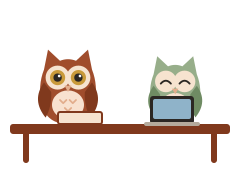
You've been putting off sorting your post for a week. Then a friend comes round, sits on the sofa scrolling their phone, and somehow you open every envelope in twenty minutes.
If that's happened to you, you've already tried body doubling. This article looks at what it is, why it might help, and how to try it in a way that suits you.
What body doubling is
Body doubling means doing a task while someone else is there. They don't help with the task. They might be doing their own work, reading, or just sitting nearby. Their job is simply to be present.
It can look like:
- In person: a housemate doing the crossword while you fold laundry, or a friend working at the same table.
- On a video call: you and a friend both on camera, mostly quiet, each doing your own thing.
- Online focus sessions: websites and apps that match you with other people (often strangers) for a set time. You say what you'll do, work quietly, then check in.
- Out and about: working in a library or café.
An NHS Lothian self-help pack for adults with ADHD suggests trying a "body double" or "work/study buddy", including a video call in silence for a set time, with check-ins to review how it went (NHS Lothian).
Why it might help
Nobody knows for sure yet. Here's what people commonly describe.
Starting tasks is one of the executive function skills (the mental skills for planning, starting and organising) that many autistic people find hard. An NHS guide for autistic adults suggests asking trusted people for reminders and check-ins as one way to manage this (Leicestershire Partnership NHS Trust). Body doubling is a bit like a quieter, ongoing version of that. There's more on why starting is hard in why starting simple tasks can feel impossible.
When it might not suit you
Being around people can take energy, even when nobody's talking. If you're already tired, a busy café or a chatty friend might cost more than it gives. Some people find that being watched, or feeling they have to look busy, makes them freeze up. Others find strangers on a video call stressful.
That doesn't mean body doubling isn't for you. It might mean you need a quieter version of it.
A few scenarios
Say it's Saturday morning and you need to clean the bathroom. You ask your partner to sit on the edge of the bath and read while you work. You don't need to talk. Having them there is enough to keep you going until it's done.
Imagine you work from home and you've been avoiding a report for days. A friend suggests a video call from 10 till 11. You both say what you're working on, mute, and check in on the hour.
Or say you're too drained for people but still need to reply to some emails. You put on a "study with me" video, where someone works quietly on camera. It's not the same as a real person, but some people find it gives a similar sense of company with less social effort.
If you're supporting someone
If someone asks you to body double, you don't need to do anything clever. Be there, be quiet, and don't comment on how they're doing the task. "Want me to sit with you while you do that?" often helps more than a reminder.
If you want to ask someone to be your body double, our guide on explaining your needs to friends and family might help. And needing someone nearby to get things done isn't a weakness. It's just knowing what helps you.
References
- NHS Lothian. Self Help Resource Pack for People with Attention Deficit Hyperactivity Disorder (ADHD), V2.0. policyonline.nhslothian.scot
- Leicestershire Partnership NHS Trust. Autism and executive functioning skills. leicspart.nhs.uk
- Ara, Z., et al. (2025). You Are Not Alone: Designing Body Doubling for ADHD in Virtual Reality. arXiv preprint (not peer-reviewed). arxiv.org/abs/2509.12153