You pop out for a few bits of shopping, and come home feeling like you've run a marathon. Nothing "happened". But you're wiped out, irritable, and need to sit in a quiet room for an hour.
If that sounds familiar, you're not being dramatic. Ordinary places are full of sensory input, and for many autistic people it adds up fast.
Sensory differences, simply explained
Your brain is constantly taking in information from your senses and deciding what to pay attention to. Many autistic people process this information differently.
That can mean being more sensitive to something (hypersensitive), less sensitive to it (hyposensitive), or a mix of both. It can change from sense to sense, and from day to day. The NHS lists being very sensitive, or not sensitive at all, to light, sounds, smells, tastes or textures as one of the signs of autism in adults (NHS).
It isn't only the five senses you learned about at school. The National Autistic Society also describes differences in balance, in knowing where your body is in space, and in interoception: noticing signals from inside your body, like hunger, thirst, temperature or feeling ill (National Autistic Society).
Why ordinary places can be so draining
In a UK study, autistic adults most often described supermarkets, cafés, high streets, public transport, healthcare settings and shopping centres as the hardest sensory environments (MacLennan et al., 2022). The study's title describes it as "a big spider web of things".
That phrase sums it up. It's rarely one thing. It's lots of small things, layered together.
The supermarket trip
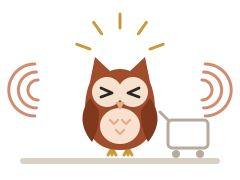
Imagine it's Saturday morning. The lights are bright and slightly flickery. The floor is shiny and reflects them back. There's music, a tannoy announcement, beeping tills, a trolley with a squeaky wheel, someone's strong perfume in the next aisle, and a queue that's too close behind you.
Any one of these might be fine. Together, they keep your brain working hard the whole time you're there. Participants in the same study described exactly this kind of layering in supermarkets, and talked about the extra effort of trying to look fine while it was happening (MacLennan et al., 2022).
The office and the commute
Offices have their own mix: overhead lighting, the hum of electrics, overlapping conversations, a colleague eating something smelly. On a train or bus, you might not be able to leave until your stop. People in the study described that feeling of being stuck as a big part of what made transport overwhelming.
How it adds up over a day
Think of your sensory capacity a bit like a cup. Each input pours a little in. Sleep, quiet time and things you find soothing help it drain.
On a good day, the cup has room. But if you're tired, stressed, unwell or masking, you might find it fills faster. The National Autistic Society notes that all of these can affect sensory sensitivity (National Autistic Society). That's why the same shop can feel fine on Tuesday and unbearable on Friday.
The effects can also arrive later. You might cope in the moment, then feel flattened that evening or the next day.
Spotting your own triggers
Knowing what fills your cup makes it easier to plan around it. You don't need to do all of these. Pick what feels manageable.
Explaining it to others
It can help to say something simple, like: "Busy places use up a lot of my energy, even when I look fine. I might need a break, or to leave early." You don't owe anyone a detailed explanation, but a short one can make it easier to get what you need.
References
- NHS. Signs of autism in adults. nhs.uk/conditions/autism/signs-in-adults
- National Autistic Society. Sensory differences: a guide for all audiences. autism.org.uk
- MacLennan, K., Woolley, C., @21andsensory, Heasman, B., Starns, J., George, B., & Manning, C. (2022). "It is a big spider web of things": Sensory experiences of autistic adults in public spaces. Autism in Adulthood, 5(4), 411–422. doi.org/10.1089/aut.2022.0024
- Loureiro, F., Ringold, S. M., & Aziz-Zadeh, L. (2024). Interoception in autism: A narrative review of behavioral and neurobiological data. Psychology Research and Behavior Management, 17, 1841–1853. doi.org/10.2147/PRBM.S410605
- Bijlenga, D., Tjon-Ka-Jie, J. Y. M., Schuijers, F., & Kooij, J. J. S. (2017). Atypical sensory profiles as core features of adult ADHD, irrespective of autistic symptoms. European Psychiatry, 43, 51–57. doi.org/10.1016/j.eurpsy.2017.02.481